


A Hole in the Story
"wise concision and wry humor"
— Dick Polman, Subject to Change, Substack ("I'm most interested in how my characters live in the historical moment.")
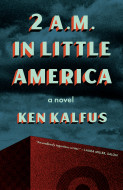
2 A.M. in Little America
2 A.M. in Little America
"2 A.M. in Little America belongs among the year’s biggest hits."
— Arianna Rebolini, Vulture (The Best Books of 2022)
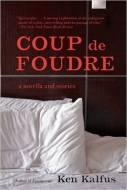
Coup de Foudre: A Novella and Stories
"psychologically persuasive and intensely readable"
— Fiction Fan Blog (A master of the short story form)
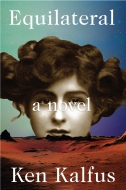
Equilateral
"... eerie, Delphic, as stark and sere as the Great Sand Sea ..... a novel that, looking back from a safe distance, seems most accurately, and eloquently, to speak for the time in which it was written."
— Nathaniel Rich, The Daily Beast ("The 2013 Novel of the Year Is...")
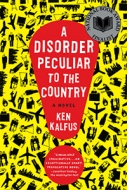
A Disorder Peculiar to the Country
"Kalfus skewers the pieties surrounding 9/11, but, having set his black comedy in the shadow of that national trauma, he reverently charts the powerful sway that world events briefly held over the lives of individual Americans. "
— The New Yorker (review)
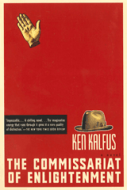
The Commissariat of Enlightenment
"Some scenes of action and description are realized so vividly that they almost have the force of hallucination. There is a recurrent vein of dark humor, and a grim sense of the lethal absurdities of totalitarian politics. No one in this book looks at anyone else's face or listens to anyone else's voice, except out of fear or coercion. People's lives are shaped by images -- religious icon, propaganda poster, film. So they become in the end not much distinguishable from images themselves, manipulated elements in the dynamic of history, looking forward to our own time and the welter of mind-softening images in which we live. ''The Commissariat of Enlightenment'' is a chilling novel, but the imaginative energy that runs through it gives it a rare quality of distinction."
— Barry Unsworth, The New York Times Book Review (Ambiguous Light)
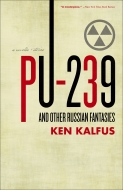
Pu-239
And Other Russian Fantasies
"Kalfus conveys a sense of Soviet and post-Soviet life in the stories here -- you'd think he'd lived there for decades. Kalfus is that rare writer of fiction whose passages of description feel like action; it's as if he were injecting his readers with a serum that renders them, in a rush, intimately familiar with the texture of the Russian experience."
— Salon (review)
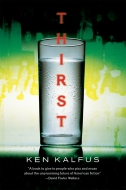
Thirst
"Kalfus veers between whimsical postmodern playfulness and a darker realism in the fourteen stories of his skilled, versatile first collection.... Ambitious and daring, with smart, fluid prose and an abundance of surprises."
— Publishers Weekly